
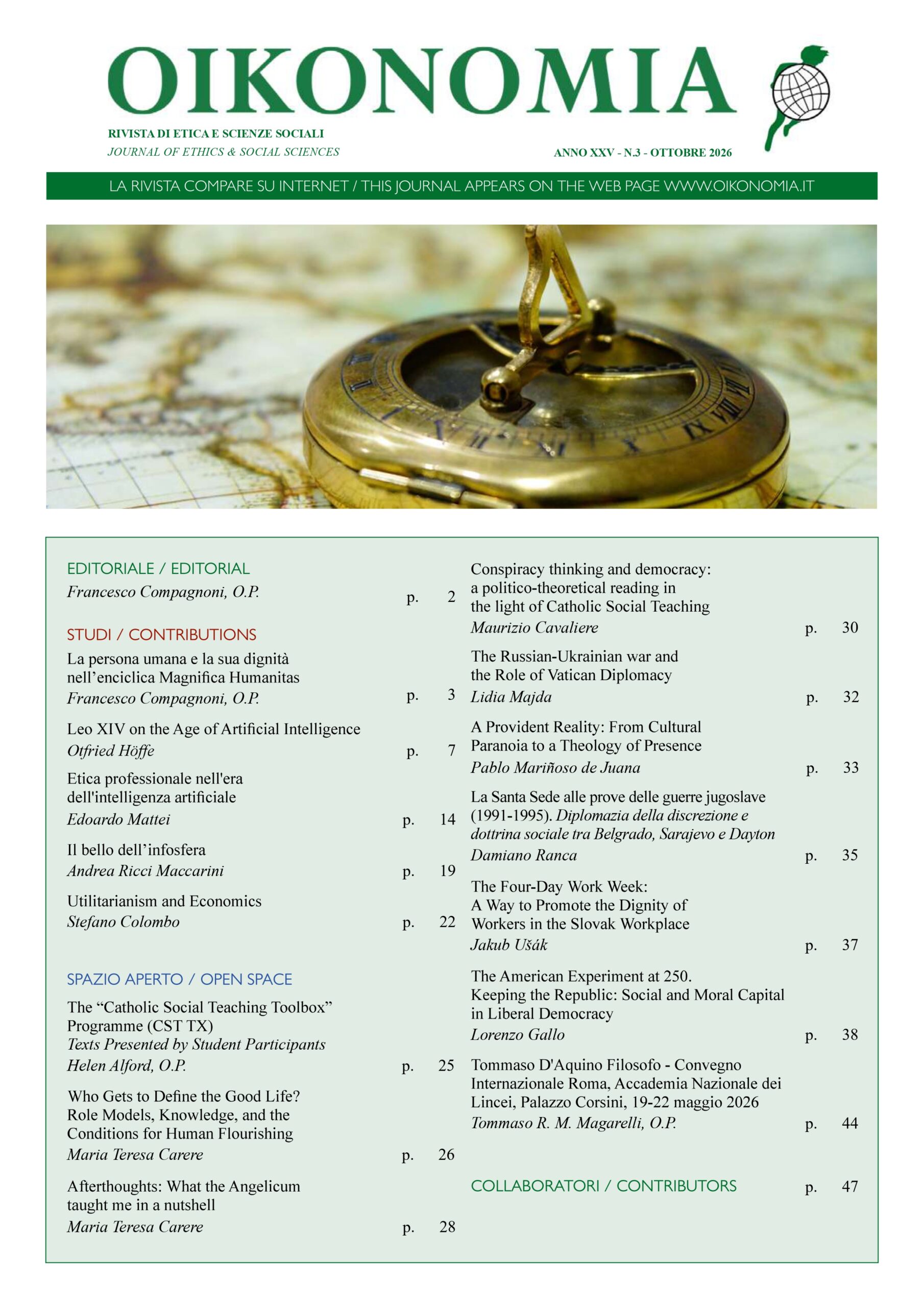
Slovakia has the second worst work-life balance of all European Union countries (Remote 2024). This stems from various cultural, legal, social and economic factors. Thanks to Slovak history, a fear of authorities, in this case employers or superiors, is deeply embedded in our collective consciousness. While labour laws are reasonably solid on paper, Slovakia still lacks Sunday rest legislation or modern work-life necessities like the right to disconnect or the regulation of after-hours communication. With a third of Slovak households living on the edge of poverty, the third lowest wages in Europe (OECD 2024) and raging inflation, the average Slovak has a hard time implementing any work-life balance in practice. Workers may legally have the right to rest, but many feel unable to disconnect from work in practice. The combination of these factors creates an environment where unhealthy work patterns become normalized.
Key experiments on a four-day work week have shown promising results for better work-life balance while retaining productivity. My research has focused on work-life balance through the lens of Catholic Social Teaching (CST). As CST wisely offers principles rather than definitive particular solutions, a four-day work week is not proposed explicitly as a solution. However, the CST framework is clear: human dignity and dignity of work, solidarity, common good, rights and responsibilities of workers and a human-centred economy are all involved.
Looking into encyclicals, we find quite a robust foundation on which the case for a four-day work week could be made. Already the first social encyclical states that “leisure and rest should be proportionate” to the work done. The most work-focused encyclical Laborem exercens emphasises the subordination of work to the family, one of the reasons why workers should have one extra free day.
CST also warns against work being considered “a simple commodity or an impersonal element of the apparatus for productivity”. The subjectivity of work and human beings as an end is what CST defends. The Compendium of the Social Doctrine of the Church goes even further, declaring that “rest from work is a right”. Free time should be long enough for a worker to be able to “tend to their family, cultural, social and religious life.”
We “can and must take on in a creative and responsible fashion the present innovations and re-organizations, so that they lead to the growth of the person, the family, society and the entire human family.” Contrary to popular belief, innovations that lead to promoting human development are not in conflict with economic efficiency. As four-day work week experiments in multiple workplaces have shown, not only the wellbeing of workers improved but also overall productivity.
There is a pretty solid basis for work-life balance in CST, but how is it to be addressed in practice? I have identified two levels on which it needs to be addressed if the situation in Slovakia is to be improved. In a nutshell, these are the levels:
The first level, more indirect, is the level of real, applicable freedom to choose one’s job, employer, workplace. As a lot of Slovak workers are poor, they do not have the financial freedom to demand better conditions from employers. This will not change without overall economic progress in the country.
The second level which needs to be addressed is the general awareness that there are alternatives to the current structure of working life. For Catholics, this means understanding CST and its ideal of work. Without awareness, there will hardly be a demand for better working conditions and pressure on employers to take their workers’ well-being seriously.
Now let me come to another point: besides trying to fix the modern workplace, how was Rome for me? My four-months of work in Rome were a great opportunity and privilege. I would not ever have imagined that I would have the chance to study my passion full-time in one of the most beautiful cities in the world and the centre of Western civilization, and at the university named after the most important Christian philosopher. And, even more than that, I was here at the time that Pope Leo XIV was preparing his social encyclical.
The environment at the Angelicum was really inspiring, especially after the reconstruction of the cloister. The biggest value for me was that I could not only read and study CST materials, but that I could discuss and ask professors questions. This helped me to dive really deeply into topics and achieve greater understanding. Moreover, weekly visits to various dicasteries and embassies gave me a chance to meet inspiring people and learn about the daily functioning of these institutions.
Now I leave Rome, but I do not think Rome will ever leave me. The unique experience and memories, the knowledge and relationships, will stay with me for a long time.
Sources used:
Rerum Novarum. Rerum Novarum. Vatican, 1891.
Laborem Exercens. Laborem Exercens. Vatican, 1981.
Compendium of the Social Doctrine of the Church. Libreria Editrice Vaticana, Vatican City, 2004.
OECD. Better Life Index, available at: OECD Better Life Index
Remote. European Life-Work Balance Index, 2024, available at: Remote Work-Life Balance Index